The Order Fulfillment Complexity Problem
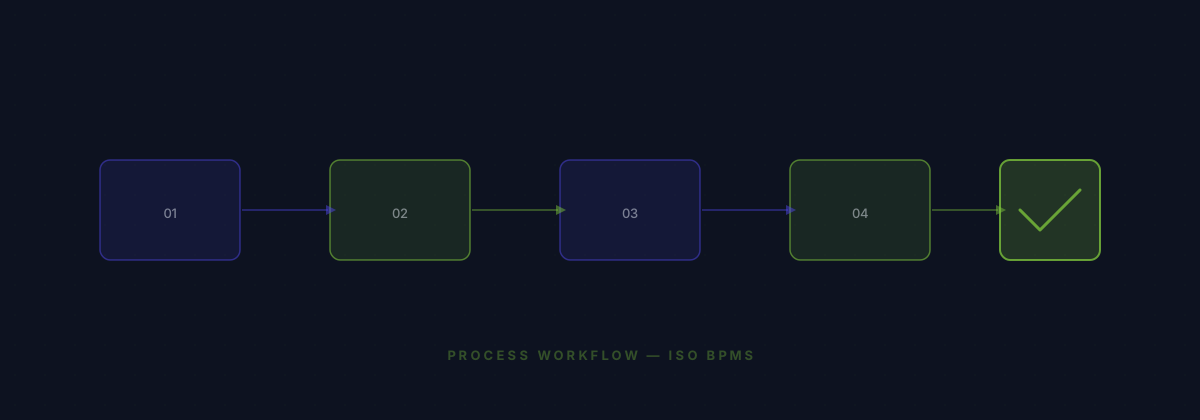
E-commerce order fulfillment looks simple from the customer's perspective: click buy, receive package. Behind the scenes, each order triggers a cascade of interconnected processes: payment verification, inventory reservation, warehouse picking and packing, shipping label generation, carrier handoff, delivery tracking, and post-delivery support. When order volume scales from dozens to thousands per day, manual coordination of these steps becomes impossible. Missed inventory updates lead to overselling. Delayed shipping notifications generate support tickets. Business process management brings order to this complexity by orchestrating every fulfillment step through automated, trackable workflows.
End-to-End Order Workflows with ISO BPMS
ISO BPMS models the order lifecycle as a workflow that coordinates multiple modules. When an order is created, the workflow engine checks inventory availability in real time, creates a pick list for the warehouse team, generates a stock movement record to reserve the items, and routes to quality check if the order value exceeds a configurable threshold. The Inventory module tracks stock levels across multiple warehouses, automatically selecting the optimal fulfillment location based on proximity and availability. Each workflow transition emits events that can trigger parallel processes: updating the customer-facing order status, notifying shipping partners, and adjusting inventory forecasts.
Returns, Refunds, and Exception Handling
The true test of an order management system is how it handles exceptions. Returns, refunds, partial shipments, and address corrections all require deviation from the standard fulfillment workflow. ISO BPMS handles these exceptions through conditional workflow branches and human-in-the-loop approval nodes. A return request triggers a workflow that routes through customer support for validation, creates a return shipping label, adjusts inventory upon receipt, and processes the refund through the Finance module. Each exception is tracked and categorized, providing data that helps identify product quality issues, shipping carrier problems, or website UX issues that cause order errors.
Scaling Operations with AI-Powered Insights

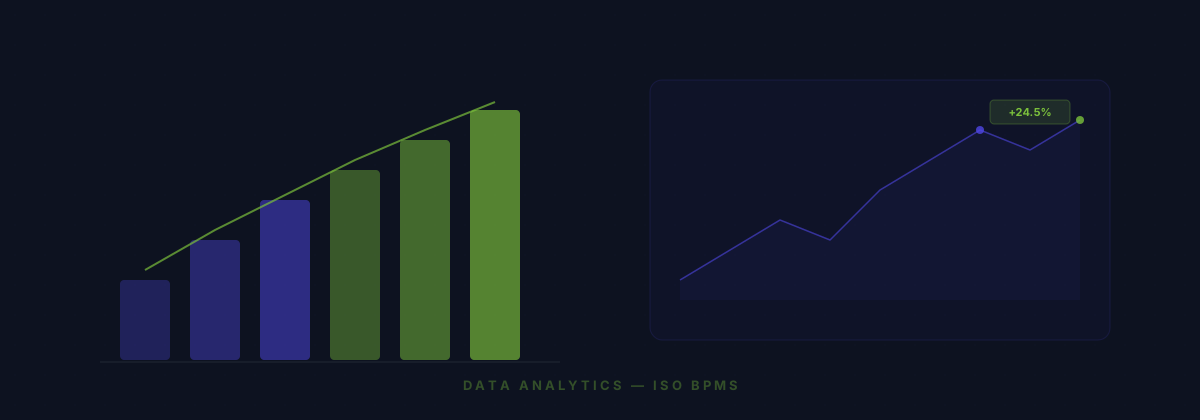
As e-commerce businesses scale, operational decisions become more complex. Which products should be pre-positioned in which warehouses? When should reorder points be adjusted for seasonal demand? Which carriers provide the best cost-to-speed ratio for different regions? ISO BPMS captures the operational data needed to answer these questions as a natural byproduct of workflow execution. AI-powered analytics surface patterns in order data, fulfillment times, and return rates that inform strategic decisions. The metadata-driven platform scales with the business: adding new product categories, warehouses, or sales channels requires configuration changes, not code changes, keeping the technology nimble as the business evolves.