The Month-End Ritual Nobody Wants
In most organizations, the last week of every month looks the same for finance: a sprint of data pulls, cross-referencing spreadsheets, chasing approvals, and reconciling figures that should already match but never quite do.
Finance teams are highly skilled professionals doing work that was never designed for humans to do manually. The reconciliation grind is a symptom of a deeper problem — financial processes built around documents instead of data.
Three Hidden Costs of Manual Reconciliation
Time is the obvious cost. The hidden costs are more serious. First, audit risk: when reconciliation happens in spreadsheets passed between people, the audit trail is incomplete. Who changed which number, and when? Manual processes cannot answer that question reliably.
Second, decision latency. When the CFO cannot see accurate figures until the tenth of the month, every strategic decision made in the first week runs on stale data. In fast-moving businesses, ten days of delay is competitive exposure.
Third, morale. Finance professionals who spend their careers reconciling spreadsheets instead of analyzing trends and advising leadership are underutilized and disengaged.
The Process-First Approach to Financial Operations
The solution is not a new accounting system. It is enforcing process discipline at the point where financial data is created — expense submissions, invoice approvals, budget requests, and payment authorizations.
When every financial transaction follows a defined workflow with mandatory fields, required approvals, and automatic audit trails, reconciliation becomes verification rather than discovery. The work that took days takes hours.
Real-Time Visibility for Finance Leaders
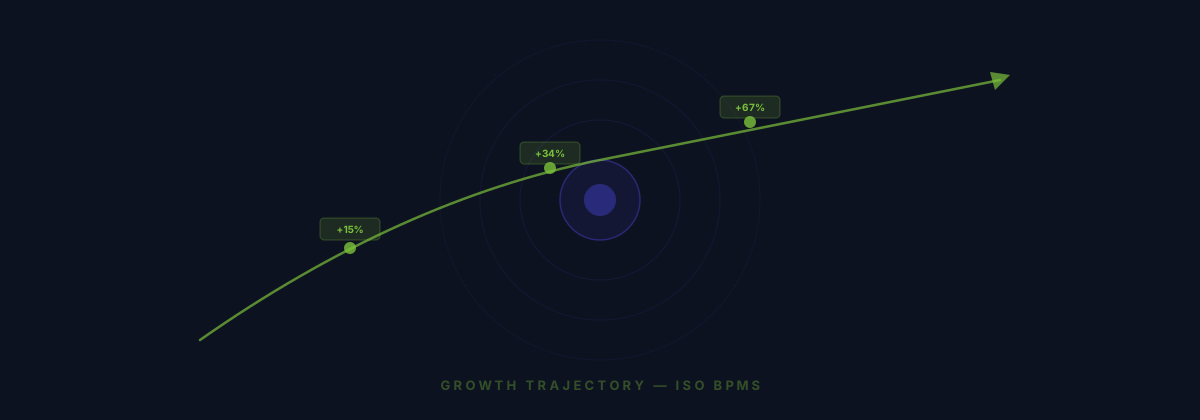
The downstream benefit is visibility. When financial processes are structured and tracked, finance leaders can see outstanding approvals, pending invoices, and budget burn in real time — without waiting for month-end consolidation.
CFOs who have made this shift describe it not as a technology upgrade but as a change in operating model. Finance moves from reporting what happened to advising what to do next.
Where to Start
Begin with invoice approval. It is one of the highest-volume, highest-variability finance workflows and the most common source of reconciliation errors. Structuring this single process typically reveals where the real friction lives — and the payoff is visible within the first month.