The Administrative Trap
Most HR departments were built to manage people. Instead, they spend the majority of their time managing paperwork — onboarding checklists, leave approvals, performance review cycles, compliance documentation.
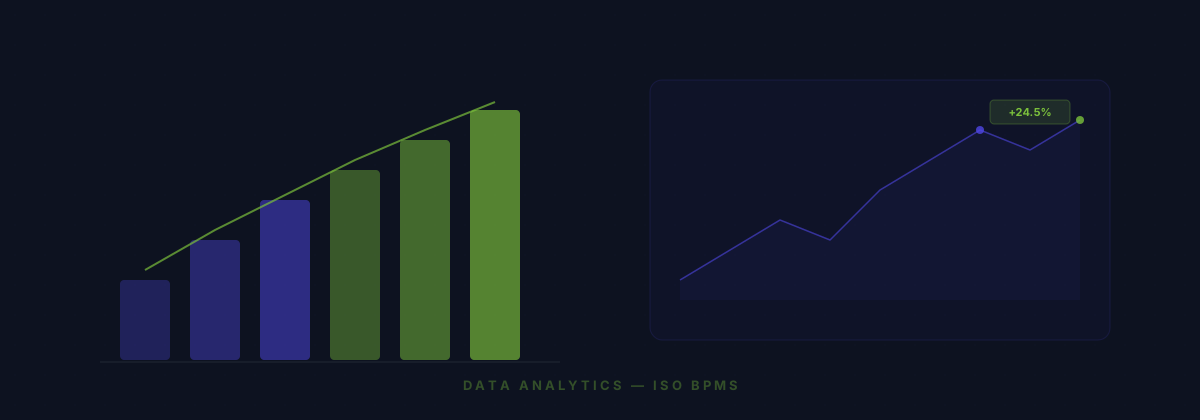
A recent industry study found that HR professionals spend up to 40 percent of their working hours on tasks that could be automated or streamlined. That is nearly two full days per week per person, on work that does not require human judgment.
The Real Cost of Manual HR Processes
The obvious cost is time. The hidden costs are more damaging. When onboarding is manual, new hires wait days for equipment and access. When leave approvals go through email chains, managers lose track of team availability. When performance reviews are coordinated via spreadsheet, deadlines slip and documentation is incomplete.
Each of these failures has downstream consequences: slower productivity ramp for new employees, scheduling errors, and compliance exposure when audit trails are missing.
What Unified Process Management Looks Like for HR
The shift is from managing processes through documents and email to operating them through a system that enforces sequence, captures state, and triggers the right action at the right time.
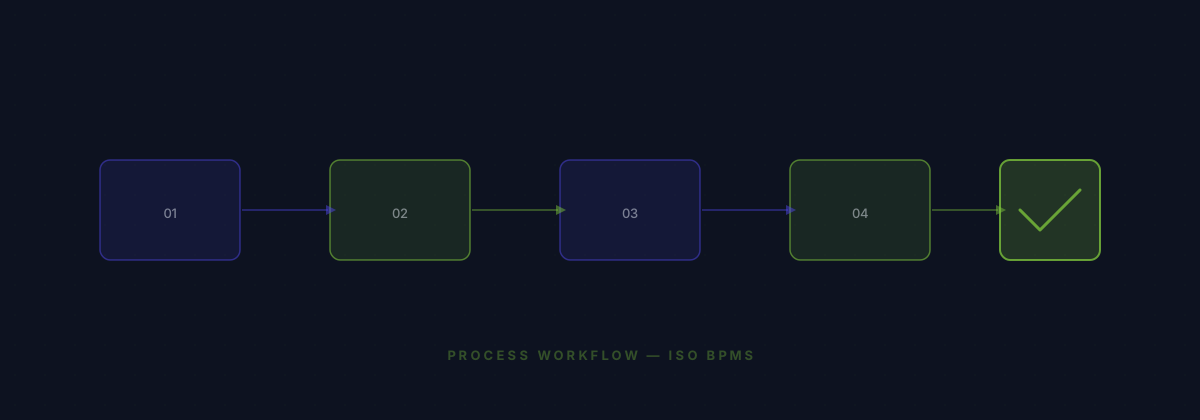
Onboarding becomes a structured workflow: IT provisioning, manager briefing, policy acknowledgment, and 30-day check-in each run in parallel or sequence with clear ownership. Nothing falls through the cracks because the system tracks every step.
Leave management moves from email chains to a structured approval flow with automatic calendar integration and team visibility. Performance cycles are scheduled, reminded, and tracked without HR chasing down completions.
The Outcome HR Leaders Actually Care About

When the administrative load drops, HR leaders can do what the function was designed for: developing talent, building culture, and advising the business on workforce strategy.
That is not a technology outcome. It is a leadership outcome. The technology just removes the obstacles standing between HR teams and the work that actually matters.
Getting Started
The most effective approach is not to automate everything at once. Start with the process that causes the most friction — typically onboarding or leave management — and build a working workflow. Prove the model, then expand.
The goal is not efficiency for its own sake. It is freeing HR leaders to operate as strategic partners to the business, not administrators of its paperwork.