The Hidden Costs of Poor Inventory Management
Inventory mismanagement silently erodes profitability. Overstocking ties up capital in warehouse shelves while understocking leads to missed sales and customer churn. Most businesses operate with incomplete visibility into their supply chain: stock levels are checked manually, reorder points are guesswork, and supplier performance is tracked in disconnected spreadsheets. Business process management applied to inventory operations transforms this guesswork into a data-driven, automated system that balances carrying costs against service levels with precision.
ISO BPMS Inventory Module: Warehouses, Products, and Stock Movements
The ISO BPMS Inventory module provides a complete supply chain data model out of the box: suppliers, warehouses, products, stock movements, and purchase orders. Every stock movement, whether receiving, shipping, transferring, or adjusting, is recorded with full traceability including quantity, timestamp, and responsible user. The metadata-driven architecture means that businesses can add custom fields like lot numbers, expiration dates, or quality grades without any development work. Purchase orders link directly to suppliers and trigger automated workflows for approval routing, receipt confirmation, and invoice matching.
Automated Reorder and Procurement Workflows
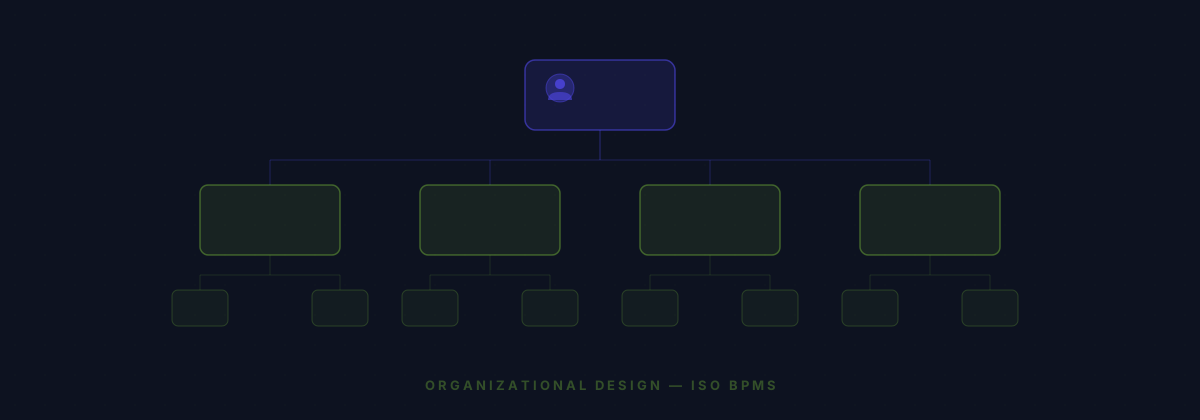
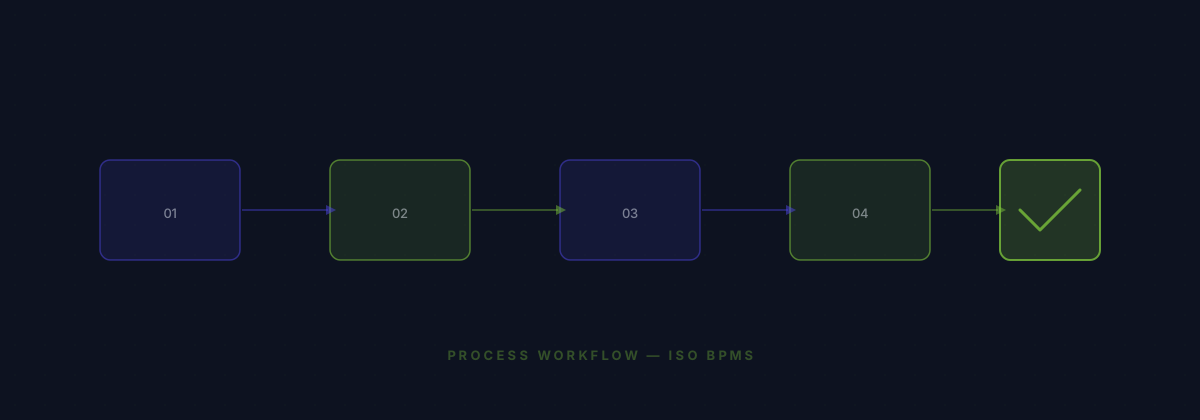
When inventory levels drop below configured thresholds, ISO BPMS workflow automation can trigger a procurement chain automatically: generate a purchase request, route it through the appropriate approval hierarchy based on value, convert it to a purchase order upon approval, and notify the supplier. The Procurement module integrates seamlessly with Inventory, managing vendor relationships, contracts, and RFQ processes. This end-to-end automation eliminates the delays between recognizing a shortage and placing an order, reducing stockout incidents and ensuring that supply meets demand.
Real-Time Supply Chain Visibility
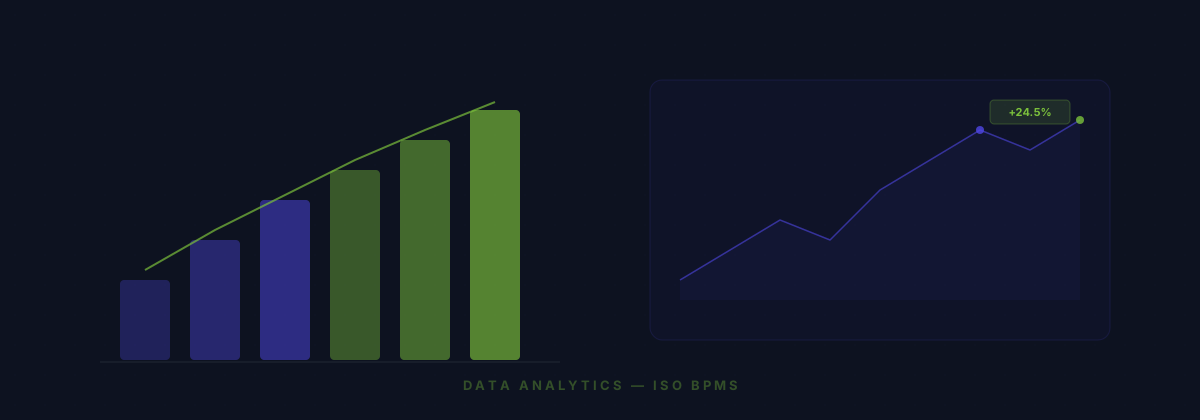
Supply chain decisions require current data, not last week's inventory count. ISO BPMS provides real-time visibility through its event-driven architecture: every stock movement, purchase order status change, and supplier delivery updates the system instantly via server-sent events. Managers can view current stock levels across all warehouses, track purchase orders in transit, and monitor supplier lead times from a unified dashboard. This real-time visibility, combined with AI-powered trend analysis, enables proactive supply chain management rather than reactive firefighting when shortages or overstock situations are discovered too late.