Warehouse Efficiency Starts with Process Standardization
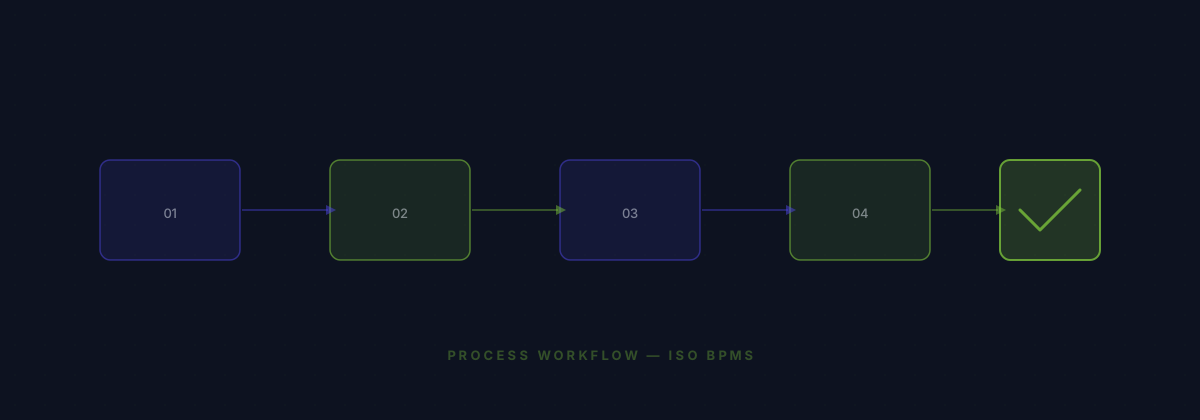
Warehouse operations involve a constant flow of goods in and out, with dozens of process steps that must be executed accurately every time. Receiving involves unloading, inspection, counting, quality verification, labeling, and put-away. Dispatch requires picking, packing, quality checks, documentation, and loading. When these processes are not standardized and automated, errors compound: wrong items get shelved in wrong locations, shipments go out with incorrect quantities, and inventory records drift further from reality with every transaction. Business process management brings order to warehouse chaos by defining standardized workflows for every operation and ensuring consistent execution through automation.
Automated Receiving Workflows

ISO BPMS models the receiving process as a structured workflow that begins when a purchase order is expected to arrive. The system creates a receiving task with the expected items, quantities, and supplier information pre-populated from the Procurement module. When goods arrive, warehouse staff follow the workflow steps: verify the delivery against the purchase order, record any discrepancies, perform quality inspections for items that require them, and confirm put-away to the designated storage location. Each step updates the Inventory module in real time, so stock levels are accurate the moment goods are shelved. Discrepancy workflows automatically notify the procurement team and create supplier quality records. The metadata-driven design means warehouses can add custom inspection criteria, storage zone rules, or quarantine procedures for specific product categories without code changes.
Pick, Pack, and Ship Automation
Outbound logistics is where warehouse accuracy directly impacts customer satisfaction. ISO BPMS generates pick lists from sales orders or transfer requests, optimizing the pick route based on storage locations to minimize warehouse travel time. The packing workflow verifies that picked items match the order, records package weights and dimensions, and generates shipping labels and documentation. Quality check nodes can be inserted at any point in the workflow for products that require final inspection before shipment. Once the package is loaded, the workflow updates the order status, sends tracking information to the customer, and adjusts inventory levels. The entire process from order receipt to truck departure is tracked with timestamps, giving warehouse managers detailed performance data on throughput, accuracy, and processing time.
Connecting the Warehouse to the Supply Chain

A warehouse does not operate in isolation. It is a node in a larger supply chain that includes suppliers, manufacturing, distribution, and retail. ISO BPMS connects warehouse operations to the broader business through its multi-module architecture. Low stock triggers in the Inventory module automatically generate purchase requests in Procurement. Received goods are matched against purchase orders for three-way matching in Finance. Customer returns from the Helpdesk module create receiving workflows with specific inspection and disposition procedures. This integration eliminates the manual coordination that typically happens through emails and phone calls between warehouse staff and other departments. Workflow automation ensures that every inter-department handoff is tracked, timely, and accurate, creating a responsive supply chain that adapts to demand changes in real time.