The Consulting Firm Profitability Problem
Consulting firms live and die by utilization rates and billable hour accuracy. Yet many firms still track time in spreadsheets or disconnected time-tracking apps, manually compile timesheets for invoicing, and lack real-time visibility into project profitability. Consultants forget to log hours, administrative staff spend days reconciling time entries against contracts, and partners discover unprofitable projects only after they are completed. These inefficiencies directly erode margins in an industry where the difference between a profitable and unprofitable engagement often comes down to accurate time capture and proactive project management.
Integrated Time Tracking and Project Management
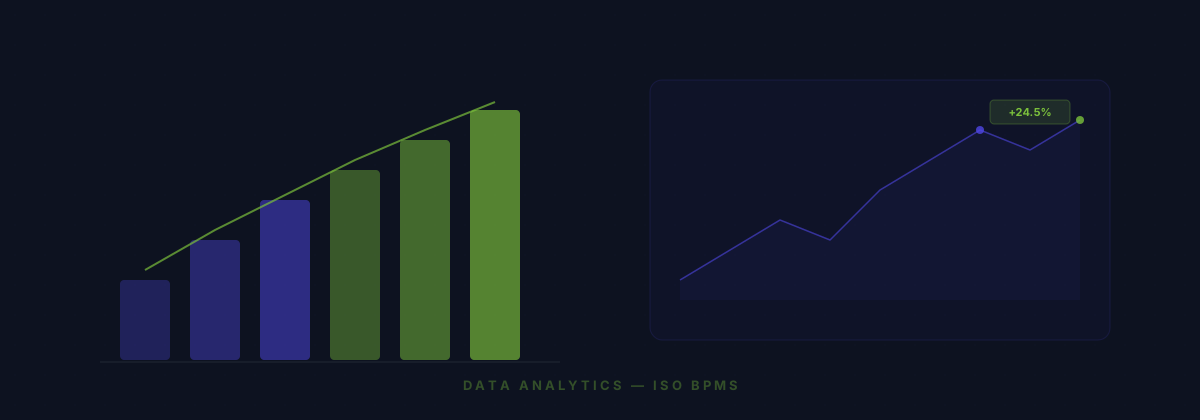
ISO BPMS combines the Project module with time entry tracking, resource allocation, and client management in a single platform. Consultants log time entries directly against project work packages, with fields for billable or non-billable classification, activity type, and client-facing descriptions. The metadata-driven design lets firms add custom fields for billing rates, project codes, cost centers, or any other dimension their business requires. Workflow automation sends daily reminders to consultants who have not logged their hours, flags entries that exceed project budgets, and routes timesheet approvals to project managers before invoicing. Real-time dashboards show utilization rates by consultant, team, and practice area.
From Approved Hours to Client Invoice in One Click
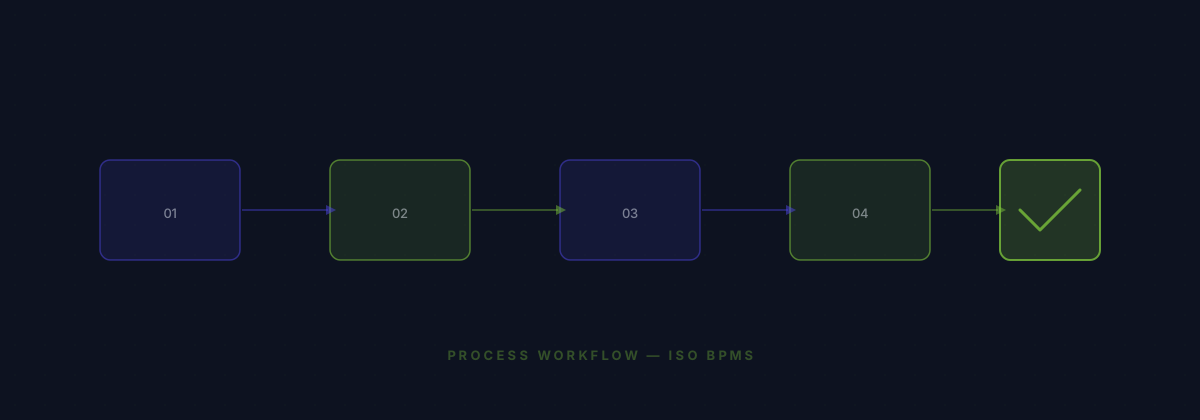
The connection between the Project and Finance modules in ISO BPMS enables automated invoice generation from approved time entries. When a project manager approves a batch of time entries, a workflow can automatically calculate the billable amount based on consultant rates, generate a draft invoice in the Finance module, and route it to the billing partner for review. Expense reports linked to the project are included in the invoice with supporting documentation from the Document module. This end-to-end automation eliminates the manual invoice preparation process that typically takes billing coordinators hours per client per month. Clients receive professional, accurate invoices faster, improving cash flow for the firm.
Resource Planning and Capacity Forecasting

Beyond time tracking, consulting firms need to plan resource allocation weeks or months in advance. ISO BPMS resource management connects consultant availability, skills, and current project assignments to provide capacity forecasting. When a new project opportunity enters the CRM pipeline, partners can immediately see which consultants are available during the proposed engagement period and whether the team has the required skills. Workflow automation can notify resource managers when a consultant is about to roll off a project, triggering the staffing process for the next engagement. This proactive approach to resource management helps consulting firms maximize utilization while avoiding the burnout that comes from over-allocation.