The Cost of Poor Inventory Visibility
Retailers lose billions annually to stockouts, overstock situations, and inventory shrinkage. The root cause is almost always poor visibility: store managers cannot see warehouse stock levels in real time, purchasing teams reorder based on gut feeling rather than data, and nobody catches discrepancies until the quarterly physical count. Multi-location retailers face even greater challenges, with inventory scattered across stores, warehouses, and distribution centers with no unified view. Business process management applied to inventory operations transforms this chaos into a controlled, data-driven system where every stock movement is tracked, every threshold triggers action, and every anomaly is investigated automatically.
Automated Stock Movements and Reorder Workflows
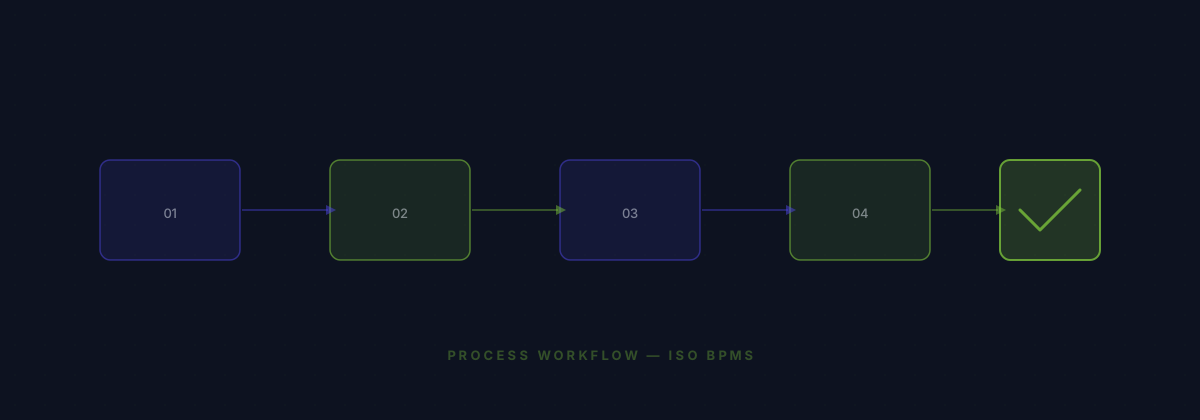
The ISO BPMS Inventory module tracks products, warehouses, stock movements, and purchase orders as interconnected objects. When a stock movement is recorded, whether it is a receipt, transfer, sale, or adjustment, workflow automation updates the relevant product quantities in real time. Reorder point workflows monitor inventory levels and automatically generate purchase requests when stock falls below the configured threshold. These purchase requests flow into the Procurement module for approval and vendor ordering, creating a closed-loop system from low stock detection to replenishment. The metadata-driven design means retailers can add custom fields like shelf location, lot number, or expiration date without any code changes.
Multi-Location Inventory Coordination
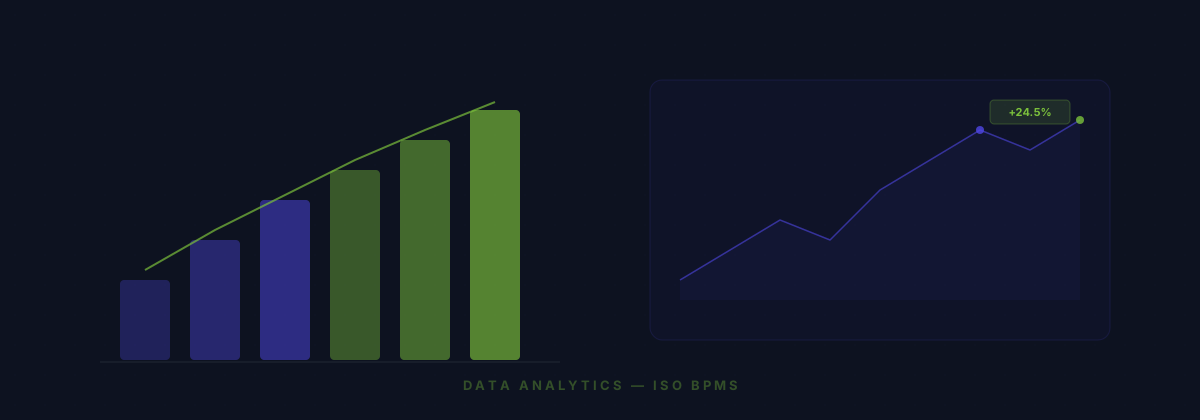
For retailers with multiple locations, ISO BPMS provides warehouse-level inventory tracking with inter-location transfer workflows. When one store runs low on a popular item while another has excess stock, the system can automatically suggest or initiate a transfer. Transfer workflows include picking, packing, shipping, and receiving steps with barcode verification at each stage. Dashboard views aggregate inventory across all locations, giving merchandising teams the visibility they need to optimize stock distribution. The AI-powered analytics identify slow-moving inventory, seasonal demand patterns, and products at risk of expiration, enabling proactive inventory decisions rather than reactive firefighting.
Connecting Inventory to the Broader Business
Inventory management does not exist in isolation. ISO BPMS connects inventory data to finance for cost tracking and margin analysis, to procurement for vendor management and purchase optimization, and to the helpdesk for customer inquiries about product availability. When a customer reports a defective product, the helpdesk ticket can trigger an inventory adjustment, a supplier quality workflow, and a replacement shipment all through connected workflow automation. This cross-module integration is what distinguishes a true business process management platform from a standalone inventory tool. Retailers get a unified operations system where inventory decisions are informed by data from every part of the business.