The Cost of Manual Processes in Healthcare
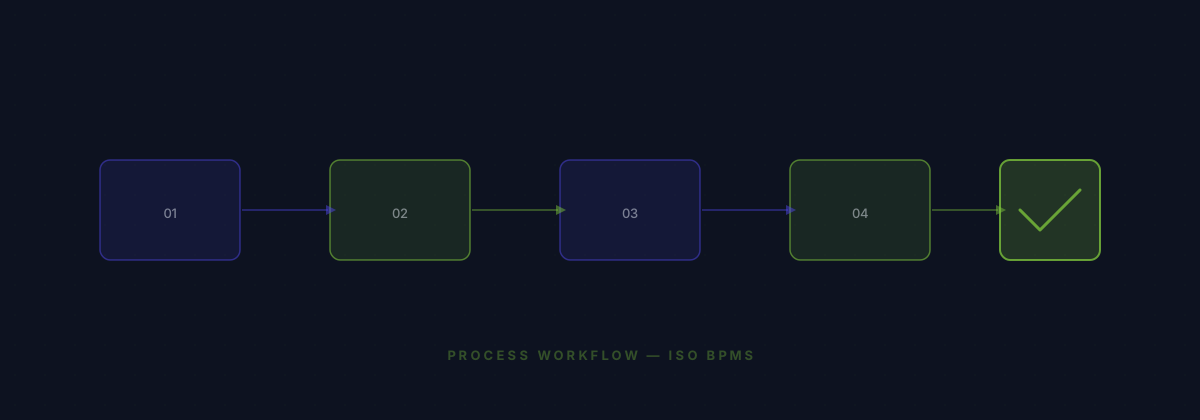
Healthcare organizations operate in one of the most process-intensive environments imaginable. From patient intake and referral management to insurance verification and discharge planning, every step involves critical handoffs between departments. When these handoffs rely on paper forms, phone calls, and manual data entry, errors multiply. Studies show that administrative inefficiency costs the U.S. healthcare system over $250 billion annually. Automated workflow management eliminates these gaps by ensuring that every process step is tracked, routed, and completed according to predefined clinical and administrative protocols.
Compliance and Audit Readiness with Business Process Management

Healthcare regulations such as HIPAA, GDPR, and Joint Commission standards demand rigorous process documentation and access controls. ISO BPMS provides role-based access control with field-level permissions, ensuring that sensitive patient data is visible only to authorized personnel. Every workflow transition generates an immutable audit trail, recording who did what, when, and why. This built-in compliance infrastructure transforms audit preparation from a dreaded quarterly scramble into a routine report generation task, freeing clinical staff to focus on patient care rather than paperwork.
Automating Referral and Approval Workflows
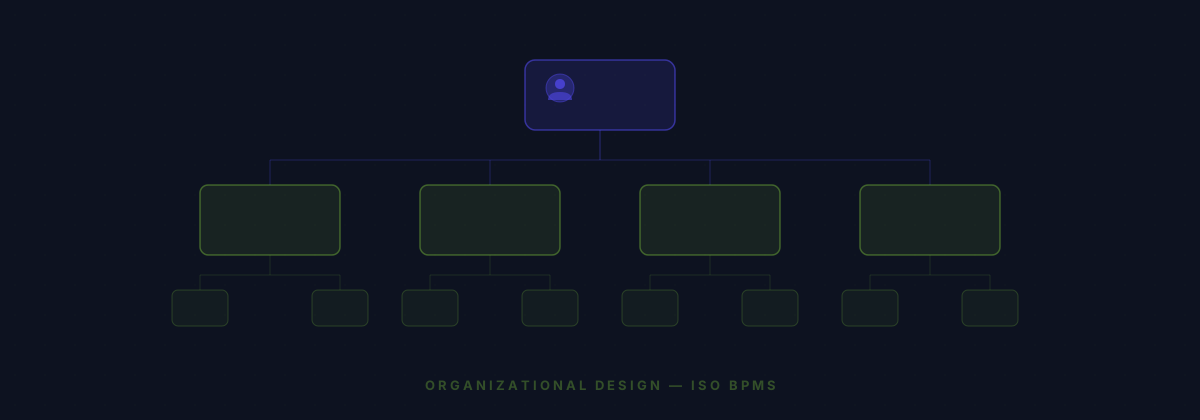
Patient referrals, prior authorizations, and treatment approvals involve multiple stakeholders across departments. With ISO BPMS workflow automation, organizations define these multi-step approval chains visually in the workflow builder. When a referral is created, the system automatically routes it to the appropriate specialist, checks insurance eligibility, and escalates overdue approvals. Human-in-the-loop nodes ensure that clinical decisions remain with qualified staff while eliminating the administrative bottlenecks that delay patient access to care.
Building a Connected Healthcare Ecosystem

Modern healthcare requires coordination across clinics, labs, pharmacies, and insurance providers. ISO BPMS serves as the connective tissue between these entities through its modular architecture and API-first design. The Document Management module handles medical records and consent forms with version control and approval workflows. The Helpdesk module manages patient inquiries and complaints with SLA tracking. By consolidating these functions on a single metadata-driven platform, healthcare organizations eliminate data silos and gain a unified view of every patient interaction.