
What CRM Was Designed to Do
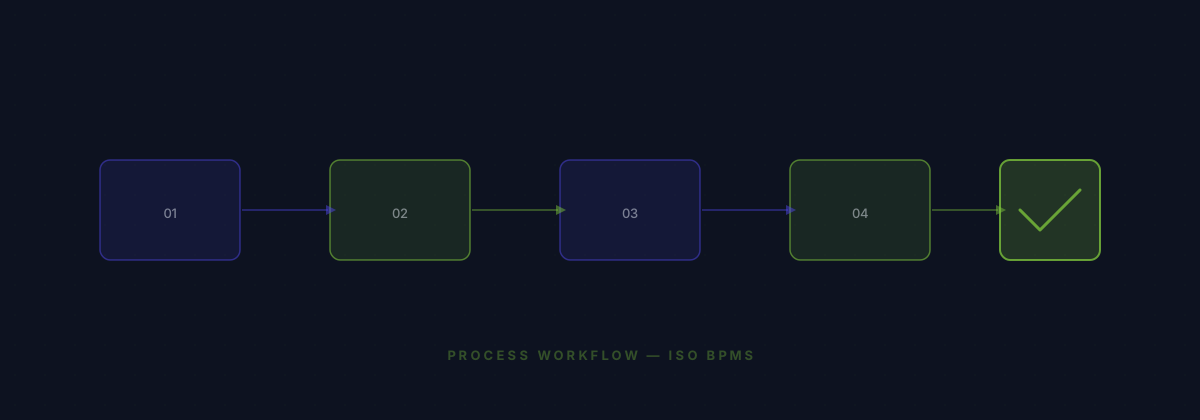
CRM was built to track relationships: contacts, activities, pipeline stages, and deal values. It does that well. What it was not built for is orchestrating the operational processes that surround those relationships.
When a deal moves to proposal stage, who needs to be notified in legal? When a contract is signed, what triggers customer onboarding? When a renewal is 60 days out, what workflow starts in customer success? CRM records the events. It does not orchestrate what happens next.
The Gap Between Sales and Revenue

Sales leaders are increasingly measured not just on pipeline closed but on revenue outcomes: expansion, retention, and net revenue retention. Those metrics are not determined by sales activity alone. They are determined by what happens across legal, finance, operations, and customer success.
When those teams operate on disconnected systems and informal handoffs, revenue leaks at every seam. Deals close, but onboarding is slow. Onboarding completes, but renewal conversations start late. Renewals happen, but expansion opportunities are missed because no one had the process to surface them.
Connected Revenue Operations
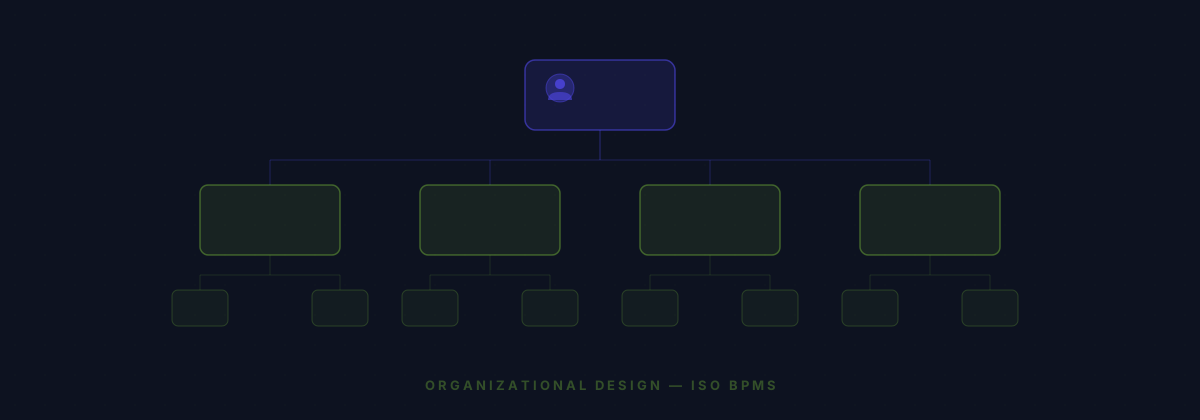
The shift is from CRM as a record system to process orchestration as an operating model. Every handoff — from sales to legal, legal to finance, finance to operations, operations to customer success — runs through a defined workflow with clear ownership, required steps, and automatic triggers.
Sales leaders can see the full customer journey, not just the pipeline. When a deal is at risk because legal review is delayed, that signal appears before the deadline passes. When a customer is showing expansion signals, the workflow routes that opportunity to the right owner automatically.
What Sales Leaders Gain
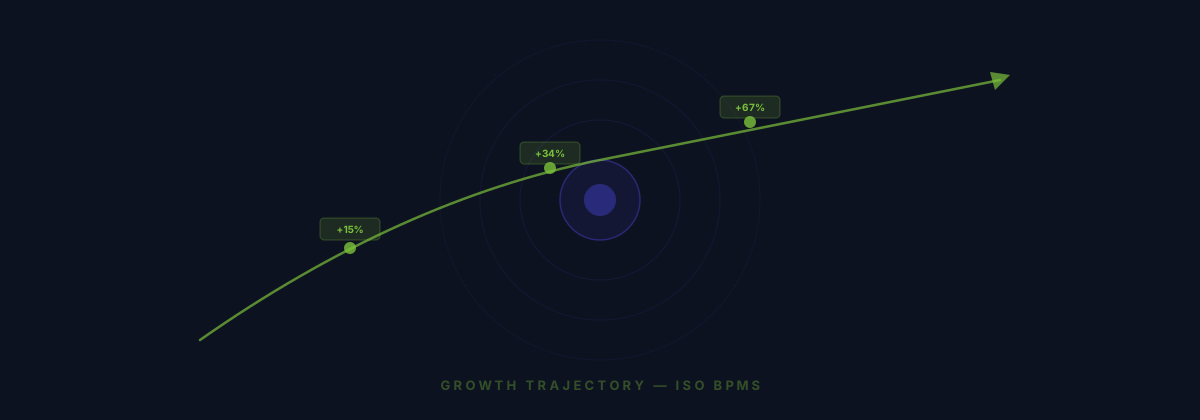
Predictability. When revenue operations are structured and visible, forecast accuracy improves because the signals are real. Close dates are based on actual workflow state, not optimistic assumptions.
Speed. When handoffs are automated, the time from signed contract to live customer drops. That matters for net promoter scores, for expansion timing, and for competitive differentiation.
The Practical Starting Point
Start with the handoff that causes the most revenue delay in your organization. For most sales teams, it is the transition from closed-won to legal or onboarding. Map it, automate it, and measure the cycle time improvement. Then connect the next seam.