The Linear Growth Trap
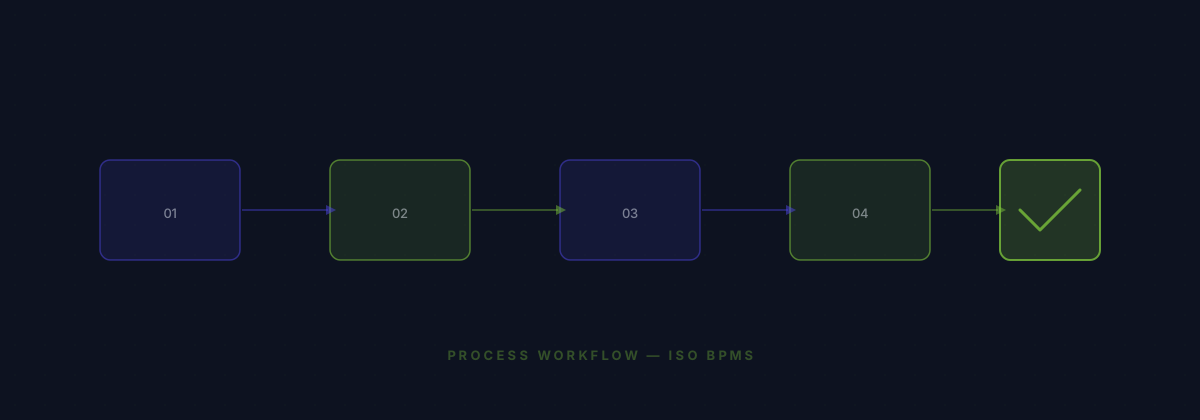
For most of business history, growing operations meant growing the team. More customers required more account managers. More employees required more HR coordinators. More projects required more project managers. More vendors required more procurement staff. The assumption was structural: coordination work scales linearly with business volume. That assumption is no longer true.
The organizations that scale most efficiently today do not just manage coordination better. They eliminate it. They build operational systems where work routes itself, where exceptions surface automatically rather than being discovered through status meetings, where approvals happen without someone manually chasing them, and where data moves between process steps without a person carrying it. This is not a headcount reduction strategy. It is a headcount redeployment strategy — moving people from coordination work to the higher-value work that actually requires human judgment.
Where Coordination Work Hides
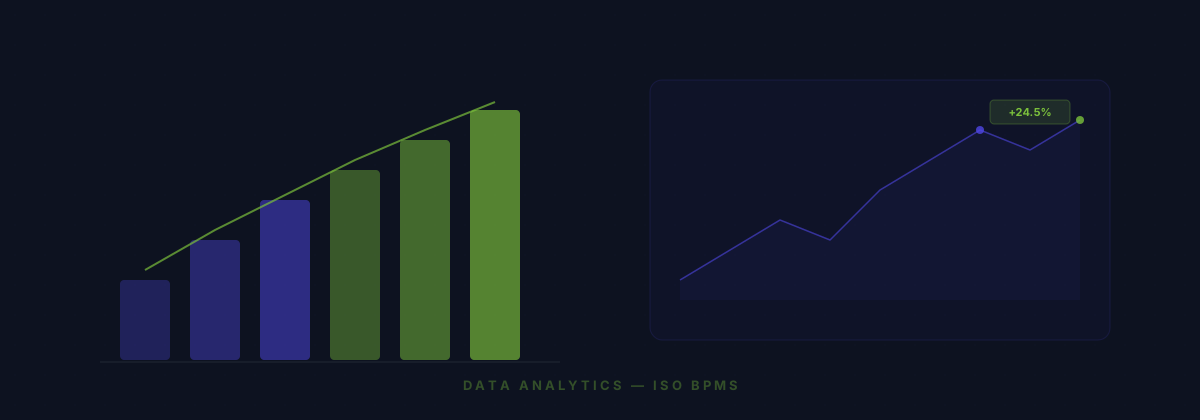
Most leadership teams significantly underestimate how much of their organization's time is spent on internal coordination rather than value-creating work. A study by Asana found that knowledge workers spend 60 percent of their time on 'work about work' — status updates, tracking down approvals, duplicate data entry, scheduling, and similar coordination activities. Only 27 percent is spent on skilled, strategic work the employee was hired to do.
This coordination load does not stay constant as you grow. It compounds. As more people join, more communication channels open. More systems are added. More handoffs are created. More meetings are scheduled to manage the complexity. Organizations that do not address this structurally find that their operational cost per unit of output rises as they scale — the opposite of what efficiency should look like.
The Automation Dividend
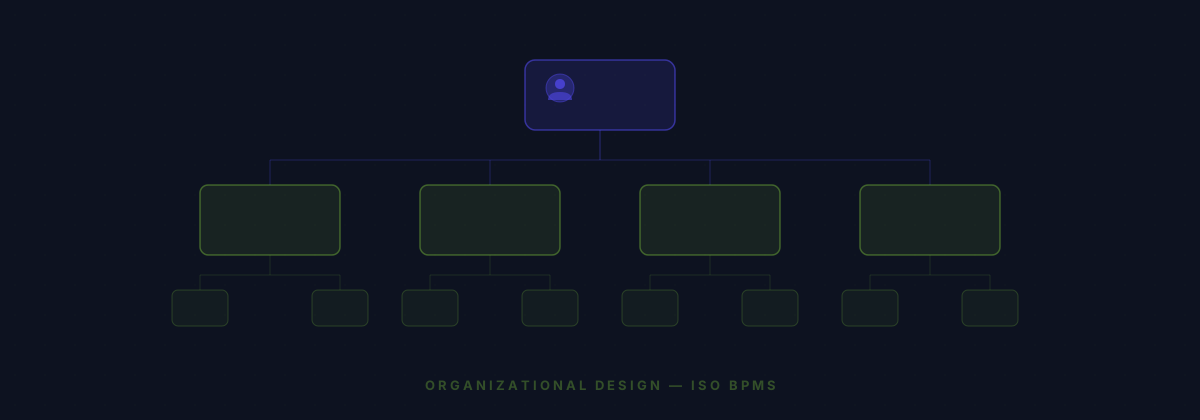
When operational workflows are automated — not just digitized but actually automated, with routing, approval, escalation, and notification happening without manual intervention — the coordination load shifts from linear to near-fixed. The same workflow infrastructure that handles 100 transactions handles 10,000 without requiring proportional growth in the team managing it.
Organizations that implement automated operational workflows typically see a 40 to 60 percent reduction in time spent on routine coordination within the first six months. That time is the automation dividend — available to be reinvested in growth, service quality, or strategic initiatives rather than consumed by the friction of running the business.
The First Step
The right starting point is not automating everything at once. It is identifying the highest-friction coordination workflow in your organization — the process that requires the most manual handoffs, the most status chasing, the most rework when something falls through the cracks — and replacing it with a workflow that routes, escalates, and closes without human intervention. The time savings are immediate and visible. And they make the case for the next step better than any business case document ever could.