The Hidden Cost of Department Silos
Most organizations run each department on its own set of tools: sales uses a CRM, HR has an HRIS, finance runs on accounting software, and project teams use various management platforms. While each tool might be excellent in isolation, the gaps between them create enormous inefficiency. When a new employee is hired, HR enters their information, then IT manually creates accounts, finance sets up payroll, and the hiring manager adds them to project tools. When a customer signs a contract, sales closes the deal in the CRM, but someone has to manually create the project, set up invoicing, and allocate resources. These handoffs between department tools are where processes break down, data gets lost, and work falls through the cracks.
One Platform, Nine Modules, Shared Data
ISO BPMS eliminates department silos by providing specialized modules for CRM, HRM, Project Management, Finance, Inventory, Document Management, Helpdesk, Procurement, and Marketing on a single unified platform. All modules share the same database, the same workflow engine, and the same user interface. When sales closes a deal in the CRM module, a workflow automatically creates a project in the Project module, generates an invoice in Finance, and assigns the delivery team. When HR onboards a new employee, workflows provision their access across all relevant modules, create training tasks, and notify their manager. This cross-module automation is not achieved through fragile integrations between separate tools. It is native to the platform because all data lives in the same metadata-driven system.
Cross-Department Workflows in Practice
Consider the employee expense reimbursement process, which typically involves the employee, their manager, the finance team, and potentially procurement. In ISO BPMS, this workflow spans three modules seamlessly. The employee submits an expense report with receipts through the Finance module. The workflow routes it to their manager in the HRM module for approval. Once approved, finance reviews it against the company expense policy. If the expense involves a vendor payment, the Procurement module handles the purchase order. The entire process is visible to all stakeholders through their respective dashboards, with notifications at each step and a complete audit trail. No email chains, no lost receipts, no manual data re-entry between systems.
Governance Without Bureaucracy
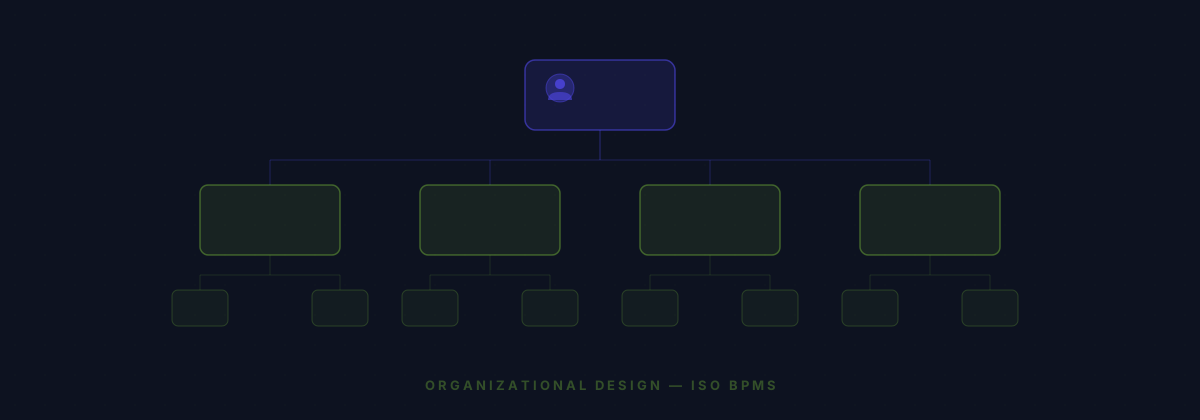
Sharing data across departments raises legitimate concerns about access control and data governance. ISO BPMS addresses this with role-based access control that operates at the field level. HR can see employee salary data that is hidden from project managers. Sales can see customer contact information that is not visible to warehouse staff. Each department has its own views, dashboards, and navigation configured through the customizable navigation editor. The result is a shared platform that feels tailored to each department while maintaining a single source of truth. Audit trails track every data access and modification across all modules, giving compliance teams complete visibility into who accessed what information and when. This approach delivers the collaboration benefits of a shared platform with the governance controls that enterprise organizations require.